
Garden Design · November 2, 2026
Xeriscape in Colorado: beautiful, water-wise — and not a yard full of rock
The word was coined right here in Denver. The gravel-covered yard it became famous for is the one thing it was never supposed to mean.
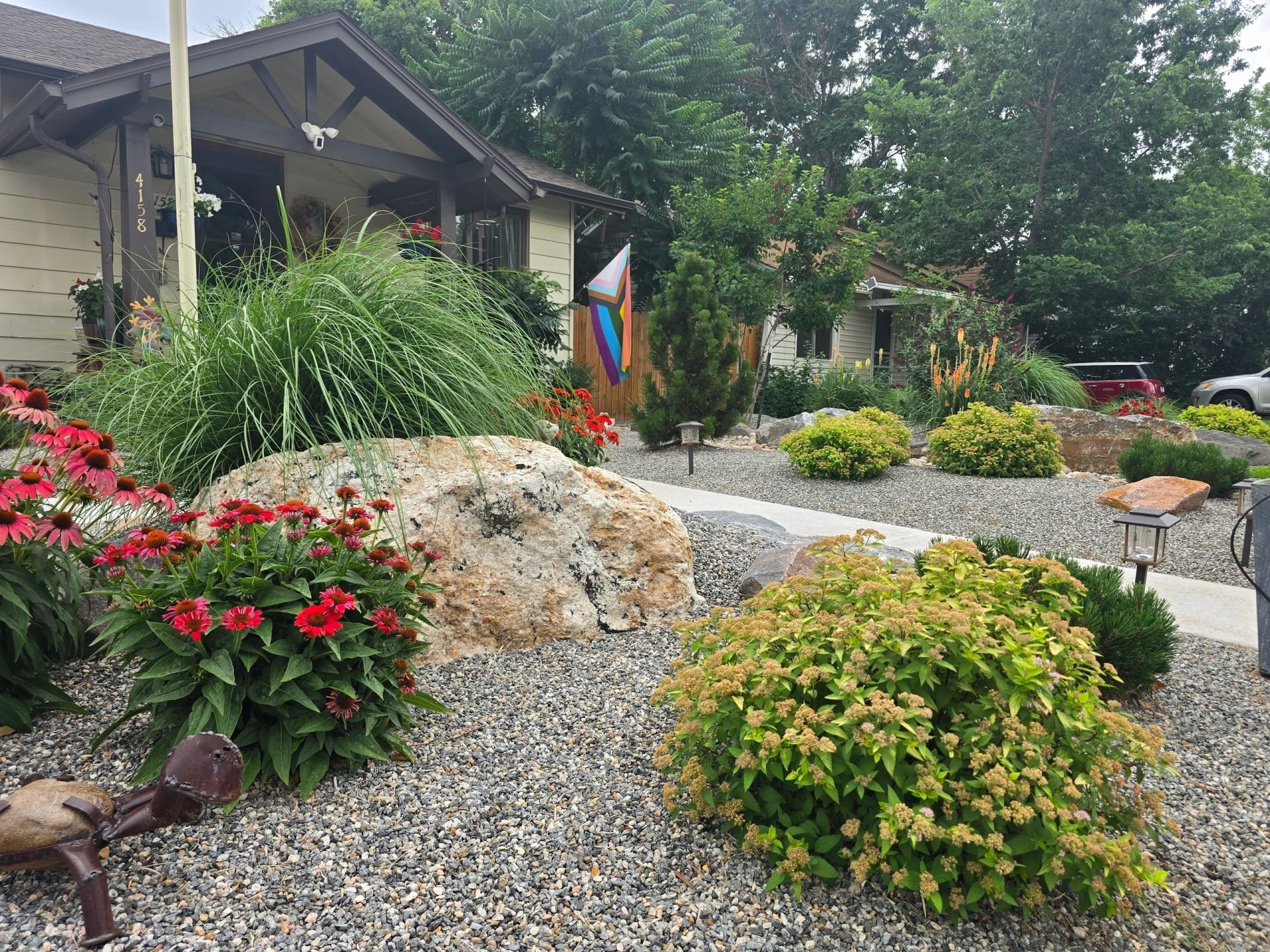
"Xeriscape" was coined by Denver Water in 1981 to describe landscaping that thrives on the water Colorado actually gets — roughly 15 inches of precipitation a year in the metro area. Somewhere along the way it got rebranded in people's minds as "replace the lawn with gravel and a few cacti." That version is ugly, hot, and — because rock mulch bakes plant roots — not even particularly good for the plants. Real xeriscape is a design discipline, and its results are lush: flowering perennials, ornamental grasses moving in the wind, shade where you want it, and a water bill that reflects the climate you live in.
The seven principles
- Plan and design first. Water needs get zoned from the start: thirsty plants together near the house, drought-tough plants out at the edges.
- Improve the soil. Front Range soil is often heavy clay. Amended soil holds moisture where roots can use it instead of letting it run off.
- Choose water-wise plants. Plants adapted to this climate need a fraction of the water once established — and many are spectacular.
- Use turf practically, not by default. Keep grass where it earns its place — play areas, a green frame for the patio — instead of wall-to-wall by habit.
- Irrigate efficiently. Drip lines for beds, precision systems like Irrigreen for lawn areas, and watering matched to each zone's actual needs.
- Mulch — the living kind. Wood mulch cools soil, suppresses weeds and holds moisture. Rock has its place in accents and dry creek beds, not as a blanket.
- Maintain appropriately. Water-wise is not maintenance-free; it's maintenance of a different, lighter kind — seasonal cutbacks, mulch refreshes, irrigation checks.
Plants that thrive on the Front Range
A Colorado xeriscape palette is anything but sparse: penstemon and blanket flower for months of color, blue grama and ornamental grasses for movement, Apache plume and rabbitbrush for structure, lavender and Russian sage for scent and pollinators, dusty miller and lamb's ear for silver foliage that makes every color next to it look richer. Grouped by water need and given a season or two to establish, these plantings ask for remarkably little — and give back a garden that looks like it belongs here, because it does.
How much water does it actually save?
It depends on what you're replacing, but the direction is never in doubt: landscapes designed on xeriscape principles commonly use half or less of the water of a conventional turf-heavy yard, and the savings grow as plantings mature and roots deepen. Pair the planting design with efficient irrigation and the effect compounds — you're using less water, and nearly all of it lands where it counts.
Where to start
You don't have to redo the whole property at once. The highest-impact first moves are usually the thirsty, awkward areas — the narrow side strip, the steep slope, the hell strip by the street — converted into planted beds that need a fraction of the care. From there, most homeowners keep going, one zone at a time.
Thinking about it for your yard? Roots designs and builds xeriscape gardens across Englewood and the Denver metro. Request a free quote and we'll walk the property with you and talk through what would thrive.
Ready for a yard that drinks less and lives more?
Garden design and xeriscape are core Roots work — climate-appropriate plantings, efficient irrigation, and craftsmanship that lasts.